
Is MMA in Austin Too Much for a Beginner?
MMA looks intense from the outside, but beginners do not need to arrive in fight shape. Here is what a first session can actually look like at Unity Combat Club in Austin.
The first thing most beginners notice in an MMA gym is not the punching. It is the vocabulary.
Stance. Level change. Clinch. Sprawl. Guard. Pivot. Suddenly, a 60-minute class sounds less like a workout and more like a pop quiz you forgot to study for.
Good news: you do not need to know the language before you walk in. A well-coached beginner MMA class in Austin should teach the vocabulary, the movement, and the decision-making one piece at a time.
At Unity Combat Club, the goal is simple: technique over trends. Here are the questions we hear most often from people considering their first MMA session.

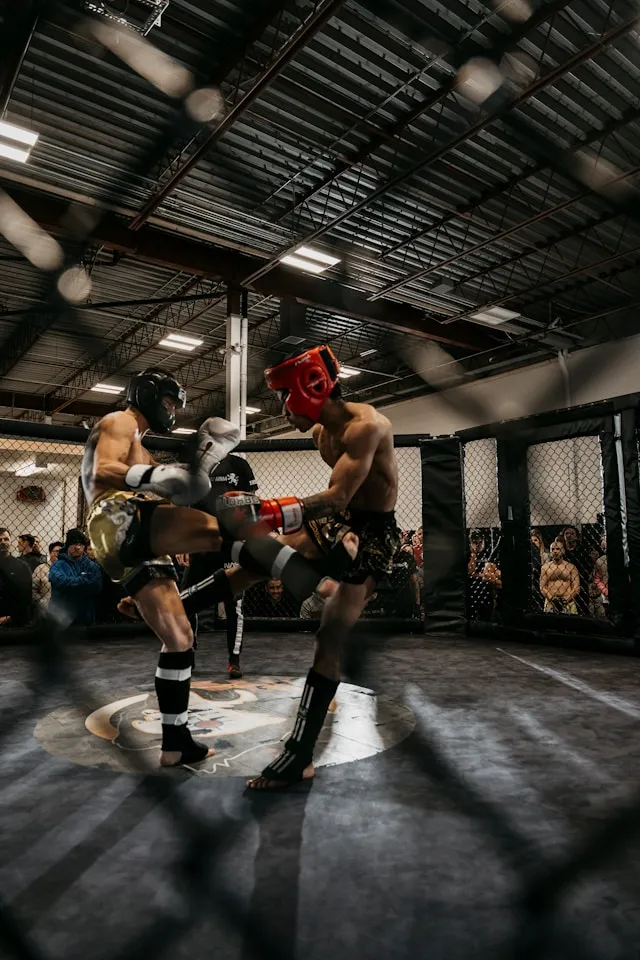
Photo by Daniil Zanevskiy on Unsplash
“Do I need to be in shape before I start MMA?”
No. That is like asking if you need to be good at piano before taking a piano lesson.
You will build conditioning as you train. Your first class may challenge your lungs, legs, and coordination, but that is not a failure. It is the starting point. Coaches can adjust pace, repetitions, and resistance while you learn the movements correctly.
The bigger advantage is starting before bad habits settle in. Sloppy footwork, wild punches, and holding your breath are much harder to correct after months of unsupervised training.
A beginner does not need to be “ready.” A beginner needs to be willing to listen, move, and try again.
“What actually happens in a 60-minute MMA class?”
MMA is not one single skill. It is the process of connecting several ranges of combat without freezing during the transition.
A typical session may move through:
- Striking fundamentals and distance management
- Wrestling entries, takedown setups, and takedown defense
- Clinch positioning and cage-wall movement
- Ground-position control drills
- Transitions between striking, wrestling, and grappling
- Short conditioning rounds that reinforce the technique
The important word is transition. A punch can create a takedown opportunity. A defended takedown can create a clinch. A scramble on the ground can return you to your feet.
That is what makes MMA different from training only one discipline. You are learning how the ranges connect, not memorizing isolated moves.
You can see the full structure of our MMA experience before you visit. It is a 60-minute session priced at $25, designed around practical skills rather than unnecessary theatrics.
“Should I start with MMA or a fundamentals class?”
That depends on how you learn best.
If the idea of combining striking, wrestling, and grappling sounds exciting, MMA can be a strong starting point. The coaching should keep the session organized so you are learning one layer at a time instead of being thrown into a confusing free-for-all.
If you want to slow down and build your striking mechanics first, Boxing Fundamental focuses on stance, weight distribution, the six core punches, footwork, pivots, and basic head movement. It is a smart option for someone who wants a clearer introduction to distance and hand technique.
For people drawn to kicks, knees, elbows, and hip-driven movement, Muay Thai Fundamentals builds the same kind of foundation through the mechanics of the art of eight limbs.
There is no prize for choosing the most complicated starting point. The best first class is the one that gives you enough clarity to keep showing up.
“Is beginner MMA safe?”
Training safely does not mean training softly. It means the intensity has structure.
That structure comes from clear demonstrations, controlled drills, appropriate pairings, coach supervision, and knowing when a round should stop. Beginners should not be expected to prove themselves by absorbing unnecessary contact or copying advanced athletes before they understand the basics.
At Unity Combat Club, the emphasis is on learning positions and reactions before adding speed or resistance. That approach matters whether you are a complete beginner, returning after years away, or simply trying to find a more purposeful workout in Austin.
The same principle applies to younger athletes. Kids Combat is built for ages 6–12 and combines Muay Thai and MMA fundamentals with age-appropriate coaching, positive reinforcement, and a supportive beginner environment.
“Will I have to spar on my first day?”
Not necessarily—and you should be suspicious of any gym that treats immediate hard sparring as a personality test.
A first session is better used to learn your stance, practice a clean technical movement, and understand how your body responds under light fatigue. Live work has value, but it should be introduced with purpose and control.
When you are ready to develop timing and defensive reactions in a more ring-focused setting, Boxing Sparring uses supervised pairings, controlled situational drills, and coach-guided rounds. The point is not to collect bruises. The point is to make better decisions in real time.
Advanced athletes can take that progression further through Boxing Advanced or Muay Thai Advanced, where the work shifts toward ring IQ, counters, clinch strategy, and fight-specific conditioning. Those sessions are for experienced practitioners—not a requirement for someone taking a first step.
“What should I bring to my first class?”
Keep it simple:
- Comfortable athletic clothing
- Water
- A willingness to work at a sensible pace
- An open mind about being corrected
- Enough time to arrive without sprinting through the door
In Austin, summer heat can make the walk, drive, or warm-up feel more demanding than expected. Give yourself a little extra time, hydrate before class, and avoid turning your first session into a test of how dramatically you can suffer.
You are not auditioning for a fight camp. You are learning a skill.
“How do I know if MMA is right for me?”
Pay attention to what you enjoy during the class.
Do you like solving movement problems? Do you enjoy learning how one technique creates another option? Do you want a workout that asks you to think while your heart rate is elevated?
If yes, MMA may be a great fit. It can support beginners, experienced athletes, teens, and adults because the work can be scaled without removing the technical challenge.
The best Austin-area combat sports gym will not promise instant transformation. It will give you a repeatable process: learn the position, practice the motion, add pressure, review the mistake, and try again.
That process is not flashy. It is also how people actually improve.
Make a day of it in Austin
A Saturday training session can easily become a full Austin outing. After class, grab fresh tacos and aguas frescas from Veracruz All Natural, or make the trip part of a larger downtown plan with a walk along the Ann and Roy Butler Hike-and-Bike Trail, a 10-mile urban trail around Lady Bird Lake. (veracruzallnatural.com)
If you are planning a longer summer afternoon, Meanwhile Brewing offers a South Austin taproom with food trucks, outdoor space, a playground, and a soccer field—better for winding down than trying to squeeze in another workout. (meanwhilebeer.com)
If you have been searching for a beginner MMA class in Austin, you do not need to wait until you feel athletic enough, tough enough, or knowledgeable enough. Start with one session, pay attention to the details, and let the training meet you where you are.
Technique over trends. That is how a first class becomes a practice.


